
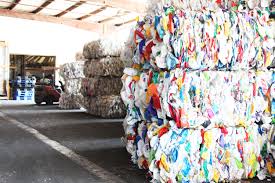
Figure 5-1 (Save the Plastics, n.d.)
HDPE can take centuries to decompose and is considered to be non-biodegradable. Like most plastics, HDPE is produced from fossil fuels and like many others, HDPE is produced in an unfavourable ratio to the amount of crude oil used. In fact, the ratio is nearly two to one when comparing the oil input to the HDPE output by measure of mass. Luckily there is some good news, it is cheaper to recycle HDPE to get it back to pellet form than it is to produce new HDPE (also known as ‘virgin’ plastic). Because of these facts, it is paramount that we reuse and recycle HDPE actively to reduce the damage to the environment.
The recycling process for HDPE is resoundingly simple. First the recycled plastics are sorted, thereby separating on a macro scale the different containers, wrappings and so forth. It is in most cases necessary to use NIR (Near Infrared Radiation) to separate HDPE from plastics with similar densities, otherwise a sink-float system can be used for separating different kinds of plastic (higher density plastics sink and lower density plastics float), assuming there is a large discrepancy between the densities of the recycled plastics. Then the rough material is cleaned from debris, an easy task in the case of HDPE, as mentioned before it is resistant to most chemicals, including those used for cleaning. Next, the HDPE is shredded into small pieces to make the process that follows easier, melting. Now it is melted down to refine the material even more, this means removing any debris or impurities that rise to the surface of the molten mixture. In the last step of the process the HDPE is formed back into pellets to be reused as needed.
Although the amount of plastic in plastic bags have decreased by about 70%, the majority of bags are still made of HDPE. This would be less concerning if the HDPE used was the recycled kind, but unfortunately large quantities of ‘virgin’ HDPE is still being produced for this and other purposes. This is not to say that there is no environmental damage being done by recycled HDPE, but the damage is much less. During the recycling process and manufacturing of goods, there is much less harmful gasses being produced compared to the production of new HDPE.
As for the sustainability of the material, it is just as sustainable as the fossil fuels that it is derived from. The only way to ensure this polymer’s continued use is to make sure we recycle as much of it as possible. (Thomas, 2012)
 High-Density Polyethylene